Share this article

Behavior Modification

Aggressive Dog Training in Bourbonnais : What to Do Before It Gets Worse

Growling, lunging, snapping, guarding. The warning signs, the mistakes that make it worse, and what real behavior work looks like.

By Mark Harwood • Custom K9 Dog Training • Bourbonnais, IL

Veteran Owned • 25 Years of Experience • In-Home & On-Site Training • (815) 549-6428

Quick answer: Take aggression seriously the first time you see it. Manage the dog safely, stop punishing the warning signs, and get a professional evaluation before the behavior gets rehearsed. Most aggressive and reactive dogs improve with a structured plan. Waiting is the one move that reliably makes it worse.

In 25 years of training dogs, I have heard the same sentence from almost every aggression client: "He never did this before." The truth is the dog almost always did, in smaller ways nobody read. At Custom K9 Dog Training, aggression and reactivity cases are a core part of what we do across Bourbonnais, Kankakee, Bradley, and Manteno. Here is what you need to know before it escalates.

What Are the Warning Signs of Dog Aggression?

Aggression rarely starts with a bite. It starts with signals, and the dog escalates when the signals stop working. Watch for these:

  • ! Hard staring, stiff body, freezing in place
  • ! Growling over food, toys, resting spots, or a favorite person
  • ! Lunging and barking at dogs or people on leash
  • ! Snapping at hands during grooming, collar grabs, or being moved
  • ! Guarding doorways, the couch, the car, or a family member

One incident is information. A pattern is a problem. If the behavior repeats or intensifies, the dog is telling you the current situation is not working, and it will not fix itself.

What Not to Do With an Aggressive Dog

Do not punish the growl. A growl is the dog's warning system, and punishing it does not remove the feeling behind it. It removes the warning. Dogs that get corrected for growling learn to skip straight to the snap, and those are the bites nobody saw coming.

Do not flood the dog with the thing it reacts to. Dragging a dog-reactive dog into the middle of a busy park to "get him used to it" rehearses the exact behavior you want gone. Do not hand the problem to a YouTube video either. Generic advice cannot see your dog, and aggression is the one category where guessing wrong has real consequences for your family and your neighbors.

Trainer Note: Until you have a plan, manage the environment instead of testing the dog. Leash in the house if needed, crate when guests arrive, no dog park, no nose-to-nose greetings. Management is not failure. It is what keeps everyone safe while the real work happens.

Why Does a Dog Become Aggressive?

Aggression is a category, not a diagnosis. Some dogs are fearful and learned that big displays make scary things back off. Some are frustrated on leash. Some guard resources. Some are territorial. Some are over-aroused and tip into intensity they cannot regulate. High-drive dogs without structure or an outlet find their own jobs, and you will not like the jobs they pick.

The reason matters because the plan depends on it. A fear-reactive dog and a resource guarder need different work. That is why serious behavior cases start with an in-person evaluation, not a package off a shelf. You can see how we approach it on our dog training services page.

What Does Professional Behavior Modification Look Like?

It starts with an evaluation in the environment where the behavior lives. I watch the dog, the triggers, the household, and how the family handles it. Then we build a plan with three parts: safety and management first, structure and obedience second, controlled exposure to the trigger third, at a distance and intensity the dog can handle.

The honest part: the goal is not a dog that loves every stranger and every dog. The goal is a dog you can manage, trust, and read in the situations your life requires. Some dogs make huge turnarounds. Some need lifelong management alongside the training. A trainer who promises a guaranteed cure for aggression over the phone is telling you what you want to hear.

The owner is half the plan. You will learn to read your dog, handle the leash, run the routines, and hold the structure between sessions. That is why we train in your home through our family dog training in Bourbonnais, not in a facility your dog will never live in.

When Should You Call a Trainer?

Before the second incident. The gap between "he growled at my nephew" and "he bit my nephew" is where training does its best work, and every rehearsal of the behavior makes the pattern stronger. If your dog has already snapped or bitten, call now, manage hard in the meantime, and do not test the dog to see if it happens again.

For what behavior work costs, our dog training pricing FAQ covers it. Aggression cases are quoted after the evaluation because the plan depends on the dog in front of me.

Aggressive Dog Training FAQ

What are the warning signs of dog aggression?

Early warning signs include hard staring, stiff body posture, freezing, growling over food or toys, lunging on leash, snapping at hands, and guarding people or spaces. Aggression escalates when these signals get ignored or punished. If the behavior repeats or intensifies, get a professional evaluation.

Can an aggressive dog be trained?

Most aggressive and reactive dogs can improve with a structured behavior modification plan, safe management, and consistent owner follow-through. The realistic goal is a dog you can manage, trust, and read, in the situations your life requires. An honest trainer builds the plan around the individual dog.

Should I punish my dog for growling?

No. Growling is a warning signal. Punishing it teaches the dog to skip the warning and go straight to snapping or biting. Take the growl seriously, remove the dog from the situation safely, and get professional help to address why the dog felt the need to growl.

How much does aggressive dog training cost in Bourbonnais?

Behavior modification at Custom K9 Dog Training is quoted after an in-person evaluation, because a fear-reactive dog and a dog with a bite history need different plans. Standard obedience packages start at $600 for 5 sessions; aggression work typically runs longer and costs more.

Worried About Your Dog's Behavior?

Do not wait for the second incident. Call or text, tell me what the dog is doing, and we will figure out the right next step. Serving Bourbonnais, Kankakee, Bradley, Manteno, and surrounding Kankakee County.

Contact Custom K9 Call (815) 549-6428

Recent Posts

Custom K9 dog training cost FAQ for Bourbonnais, IL, with police dog and black-and-red promo graphics
By Mark Harwood July 12, 2026
Dog training in Bourbonnais starts at $600 for 5 in-home sessions at Custom K9. What affects price, in-home vs group class, and behavior work costs.
Trainer and German shepherd in a garage dog training space, with bold red and black text.
By Mark Harwood July 12, 2026
Turn your garage into an all-weather dog training space in Bourbonnais and Kankakee County. Flooring, temperature, and setup tips from Custom K9 Dog Training.
Custom K9 Dog Training ad: German shepherd, Top 10 questions, Bourbonnais, IL, black red white layout
By J. Green May 19, 2026
Custom K9 Dog Training answers the top 10 questions Bourbonnais dog owners ask trainers about obedience, puppies, reactivity, aggression, leash pulling, off-leash training, and more.
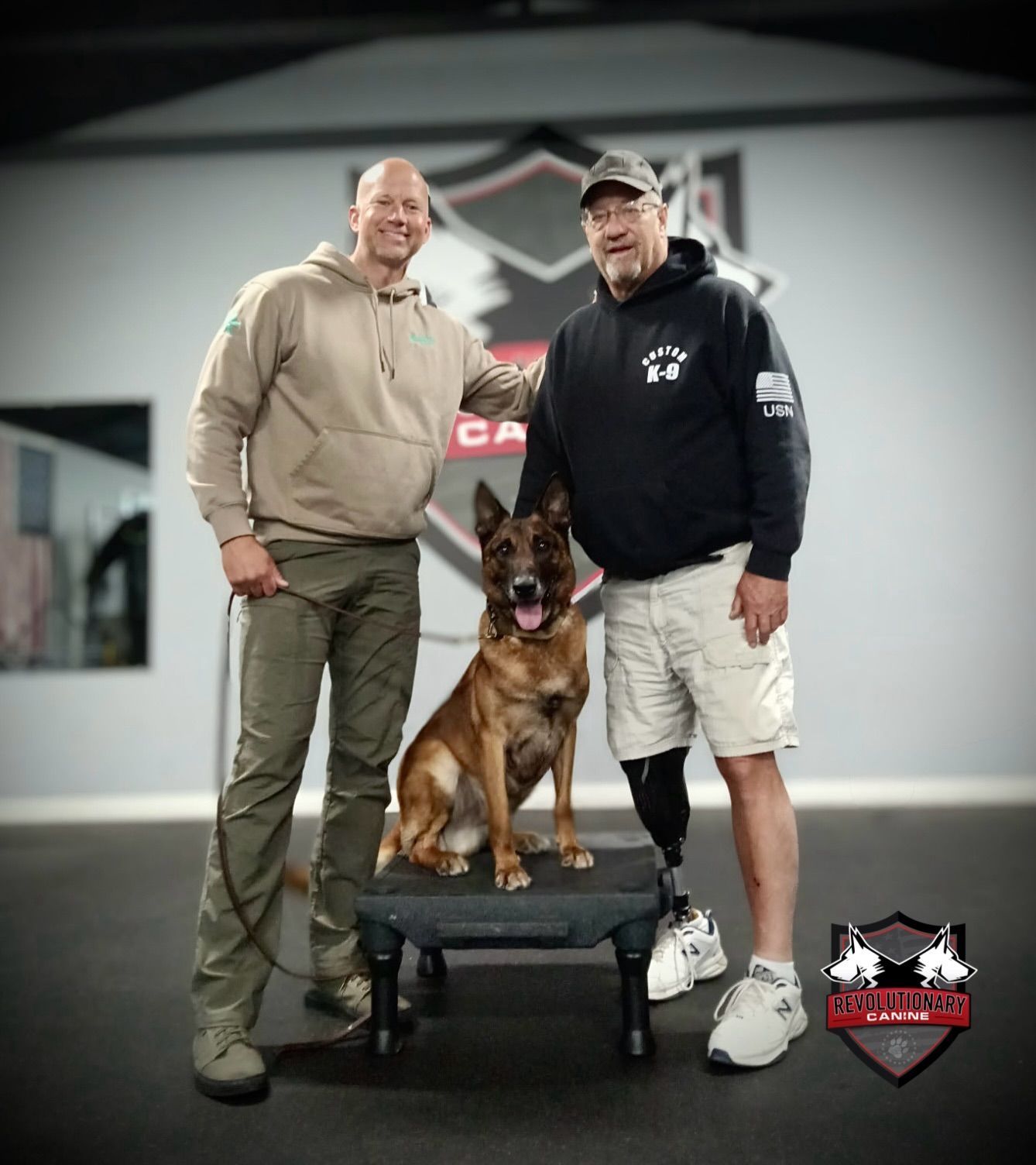
Belgian Malinois puppy from Custom K9 Dog Training in Bourbonnais Illinois raised for PSA
By J. Green May 6, 2026
Custom K9 Dog Training raised Belgian Malinois puppies for PSA, police K9 work, and expert trainers across the USA, including Mark’s new PSA dog, Ditto.
Aly and Isla Dog Training in Kankakee County
By J. Green February 11, 2026
Ultrasound confirms at least 7 Belgian Malinois puppies from Pike (PSA 2 NVBK import) and Isla. Located in Bourbonnais, serving Kankakee County.
dog trainer in bourbonnais illinois
By J. Green February 9, 2026
Looking for professional dog training in Bourbonnais or Kankakee County? Learn what to expect from in-home dog training and get answers to common local dog training FAQs.