PSA Bite Work Training in Bourbonnais, IL : Putting a First Timer in the Suit
Saturday we had a Dutch Shepherd on the field, his owner running the leash, and a brand new decoy pulling on a bite suit for the first time in his life. Here is what that session actually looked like, and why almost everything I said out there was about safety.
Veteran Owned • Obedience, Behavior, Working K9 • Bourbonnais, Kankakee, Bradley, Manteno • (815) 549-6428
Short answer: On August 2, 2026, Custom K9 Dog Training ran a PSA bite work session on our training ground in Bourbonnais, Illinois. Bill Rankin, who owns the Texas Roadhouse here in Bourbonnais, brought his Dutch Shepherd out to work. Isla and Ditto both got reps in. Jeremiah Green put on a bite suit for the first time and learned how to catch a dog. The session was less about the dog biting and more about the men in the suit learning how to keep those dogs uninjured.
Most people picture bite work wrong. They picture a snarling dog and a guy in a padded suit getting run over, and they think the point of the whole thing is the collision. It is not. The collision is the easy part. Any dog with drive will run at a man in a suit.
The hard part is what happens in the half second before contact and the two seconds after it. That is where a dog gets hurt or gets confident, and that is entirely on the decoy. Which is why I spent most of Saturday afternoon repeating myself to a first timer.
Who Was on the Field
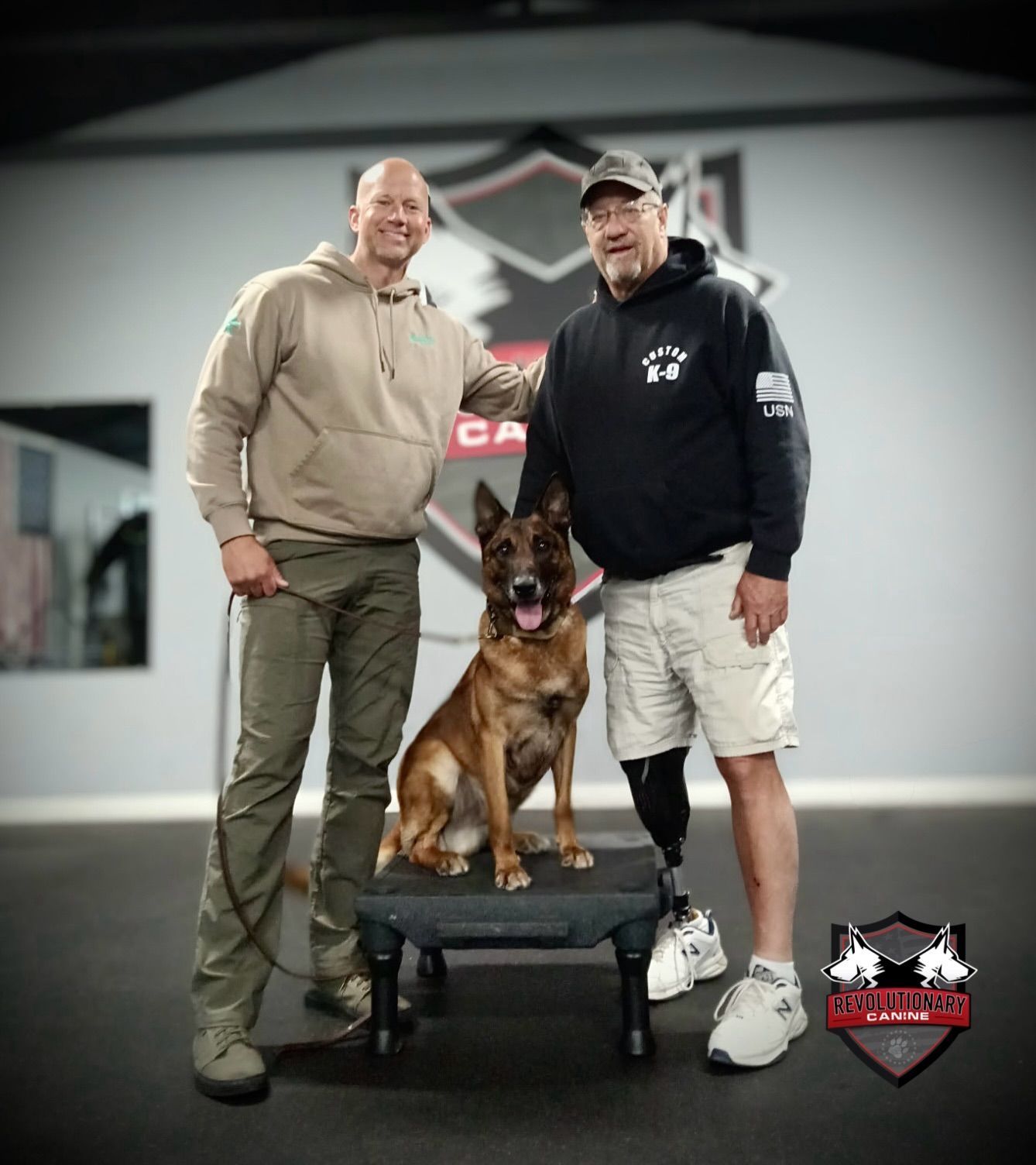
Bill Rankin, who took his turn on the leash and his turn in the suit. Jeremiah Green, in a bite suit for the first time in his life. Two dogs working, Isla and Ditto. And me, running the session and calling every rep.
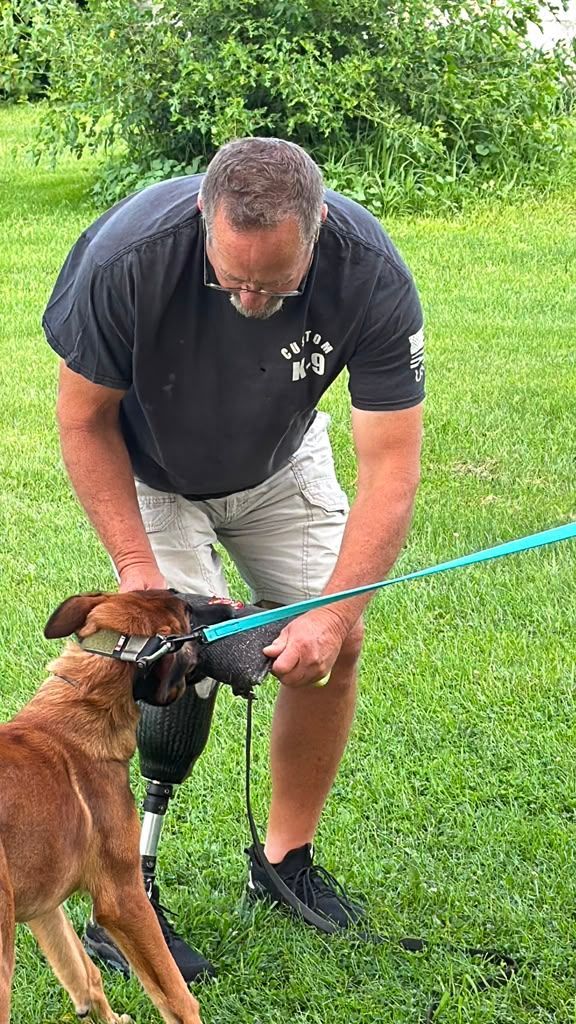
Bill runs the Texas Roadhouse in Bourbonnais. If you have eaten there on a Friday night you understand the guy is not short on things to do. He still hauls his Dutch Shepherd out to train, which tells you something about how seriously he takes the dog.
Dutch Shepherds are all over PSA and all over police K9 rosters, and it is not an accident. They are hard, they are quick, they hold up under pressure, and they bounce back fast when a rep goes sideways. They are also the exact dog that turns a nice quiet house upside down if nobody gives them work. Bill gives his work. That is the whole difference.
Jeremiah had never been in a suit. Not once. He builds websites for a living and runs a power washing company, which is about as far from catching a working dog as you can get. He asked to learn, so we started him at the bottom, the way everybody starts.
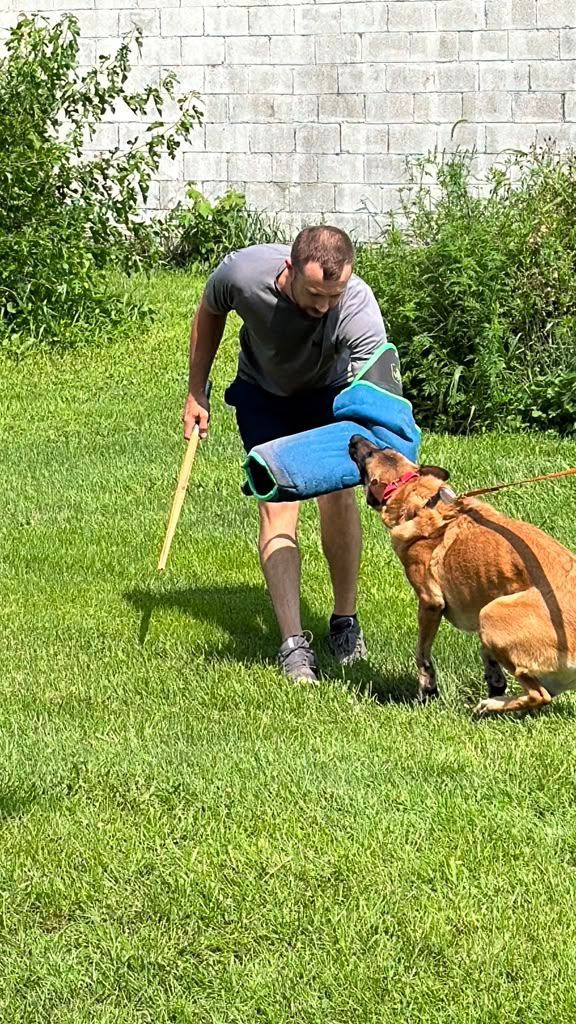
Working Isla on the grip. Every rep either builds a picture or muddies one.
What PSA Actually Is
PSA stands for Protection Sports Association. It is a civilian dog sport that pairs strict obedience with scenario based protection work. Everybody starts with an entry level certificate called the PDC, then moves through PSA 1, PSA 2, and PSA 3. Suited decoys work on the field during the obedience routine, and by the upper levels the handler does not know the protection scenario until the day of the trial.
That last part is what separates PSA from most protection sports. You cannot pattern train your way through it. In other venues a smart handler can memorize the routine and drill it until the dog runs on autopilot. PSA takes that away on purpose. The judge writes the scenario, the handler finds out on trial day, and now you find out whether you trained a dog or trained a routine.
There are hidden sleeve bites, courage tests, call offs, and environmental stability tests. Handlers have to weigh risk against reward mid scenario. Plenty of law enforcement K9 teams cross over into it because it looks more like the street than a memorized pattern does.
If you want the rulebook, the trial calendar, and the club list, it is all on the association site at psak9-as.org. Read the courage test description before you decide your dog is ready.
From Mark: PSA is judged on obedience just as hard as protection. People forget that. I have watched dogs with beautiful bite work wash out because they could not hold a down while a decoy jogged past them. The bite is the fun part. The obedience is the title.
How the Session Ran
Suit up, learn the stance, take contact with no dog, then take a real bite on a short line with me calling it. Reps stayed low. We stopped while everyone still had gas in the tank.
The Suit, and Why It Fits Like That
A bite suit is heavier and hotter than anyone expects, and it changes how you move. Jeremiah found that out in about ninety seconds. We checked the fit at the arms and legs, because a suit that shifts on you is a suit that lets a tooth find skin. Then he walked around in it until moving stopped feeling like a costume.
Stance, Angle, and Where to Put Your Feet
You do not stand square and wait to get hit. You give the dog an angle, you present the target you want him to take, and you turn with him instead of bracing against him. Square and stiff is how people blow out a knee and how dogs get whipped around. We drilled the stance dry, no dog on the field, until it looked right.
Taking the First Bite
Short line, controlled distance, handler holding. The first real catch is mostly about not flinching, because a flinch pulls the target away right as the dog commits and that is how a dog misses and hits with the side of its mouth. He took it clean. The face he made afterward is the reason we take photos.
Absorbing, Not Fighting
Once the dog is on, you carry him. You keep his feet where they belong, you support the weight, and you let the pressure come from your movement rather than from yanking against his neck. A new decoy's instinct is to pull. Pulling is exactly wrong, and it is the fastest way to wreck a young dog's grip for good.
The Out, and Ending on a Win
The out belongs to the handler, not the decoy. My job in that moment is to go still and quiet so there is nothing left to fight. Bill called it, the dog released, and we quit while the dog still wanted more. Every session should end with a dog that thinks he got cut off early.
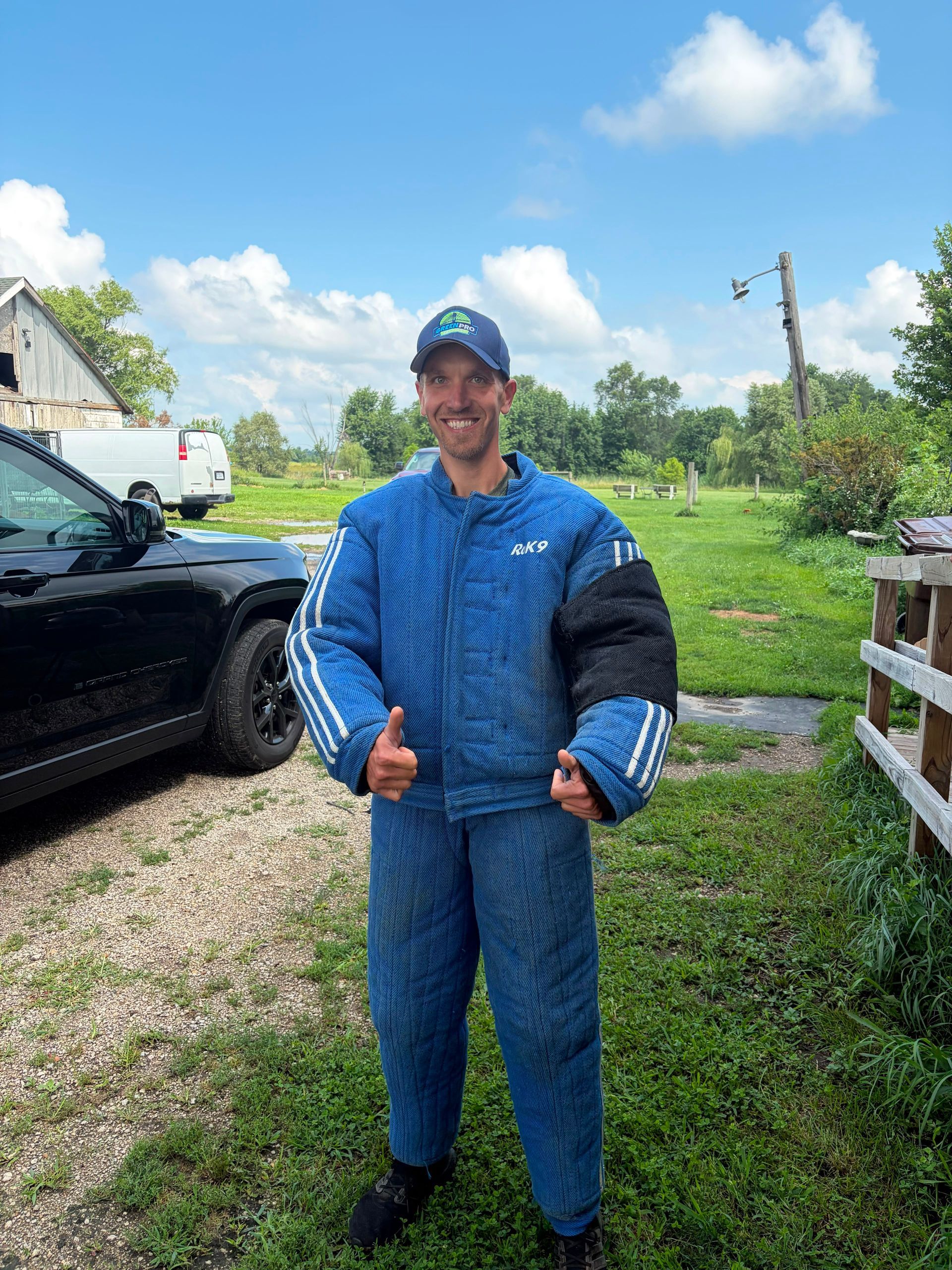
Jeremiah Green in the suit for the first time. Heavier than it looks, and hotter.
Protect Yourself. Protect the Dog First.
A decoy can get bruised and go home. A dog can lose a tooth, tear a neck, or lose its confidence in one bad catch, and confidence does not grow back on its own. That is why decoy work is a skill you get taught, not a favor you ask a friend in a hoodie to do.
I said some version of that about fifteen times Saturday. It is the whole reason PSA certifies the decoys who work its trials instead of letting clubs grab whoever is willing. Certified decoys have to know the routines, be fit enough to perform them, and be safe catching dogs. Safe catching dogs is the part that matters.
What Hurts a Dog
- • Pulling the target away as the dog commits
- • Standing square and letting the dog hit a wall
- • Yanking or twisting once the dog is gripped
- • Too many reps, especially in August heat
- • Pushing a dog past what it is ready for to look impressive
What a Good Decoy Does
- ✓ Presents a clean target and holds it steady
- ✓ Turns with the dog and absorbs the momentum
- ✓ Reads the dog and adjusts pressure rep by rep
- ✓ Goes quiet and still so the handler can call the out
- ✓ Says stop when the dog has had enough, even if nobody else does
From Mark: The suit protects the man. Nothing protects the dog except the man in the suit knowing what he is doing. Remember which one of you signed up for this.
Should Your Dog Be Doing Bite Work?
Probably not, and that is not an insult. Protection sport needs a stable, confident dog with real drive and clean nerves, plus an owner who will train obedience every week. Most family dogs in Kankakee County need structure and a walk, not a bite suit.
I get calls where somebody wants their dog trained to protect the house. Nine times out of ten what they actually want is a dog that stops jumping on the mailman and comes when called. That is obedience work, and it is a lot cheaper.
The tenth call is a dog that genuinely belongs in the sport, and I will tell that owner straight. I will also tell you if your dog is not a candidate, because putting a nervy dog in a protection scenario is not training, it is a lawsuit waiting on a date.
What I Look for in an Evaluation
- ✓ Nerve. Does the dog recover fast when something startles it, or does it stay rattled?
- ✓ Drive. Real, sustained drive for a reward, not a burst that dies in thirty seconds.
- ✓ Clarity. A dog that switches on and off, not one stuck in the on position.
- ✓ The handler. If you will not do the homework, the dog cannot carry both of you.
Family Obedience Starts at $600
Five one hour in-home sessions covering obedience, leash work, manners, and owner handling. Protection, working K9, and PSA sport programs are quoted after an in-person evaluation, because the timeline depends on the dog in front of me.
Dog Training in Bourbonnais: Questions I Get Asked
What is PSA dog training?
PSA stands for Protection Sports Association, a civilian dog sport that combines strict obedience with scenario based protection work. Competitors start with a mandatory entry level certificate called the PDC, then move through PSA 1, PSA 2, and PSA 3. What makes PSA different is that suited decoys work on the field during the obedience routine, and the protection scenarios in the upper levels are not revealed to the handler until trial day.
Does Custom K9 Dog Training do bite work in Bourbonnais, IL?
Yes. We run protection and PSA sport sessions on a training ground in Bourbonnais, Illinois, alongside family obedience and behavior work. Bite work is not an add on to a pet obedience package. The dog gets evaluated first, and the handler has to be willing to put in the obedience foundation before any protection work starts. Call or text (815) 549-6428.
What does a decoy do in PSA bite work?
The decoy wears a full bite suit and plays the role the dog has to read and respond to. The job is not to fight the dog. A decoy presents pressure, catches the bite cleanly, absorbs the dog's momentum, and gives the dog a correct picture every single rep. A bad decoy can injure a dog's neck, teeth, or confidence in one catch, which is why decoys who work PSA trials are certified through the association.
Is bite work safe for my dog?
It is safe when the equipment fits, the decoy knows how to catch, and the dog is worked in short sessions with clear rules. The risk almost never comes from the dog being aggressive. It comes from a decoy who mistimes a catch or a handler who pushes a young dog past what it is ready for. We keep reps low, end on a win, and stop the second a dog looks unsure.
Are Dutch Shepherds good for protection sports?
Dutch Shepherds are one of the most common breeds in PSA and in police K9 work for good reason. They tend to be hard, fast, environmentally solid, and they recover quickly from pressure. They also need a job. A Dutch Shepherd with no outlet in a normal family home usually finds its own work, and the owner does not like the work it picks.
Can any dog do protection training?
No, and any trainer who tells you otherwise is selling something. Protection work needs a stable, confident dog with real drive and clear nerves. A fearful dog or a dog with a bite history is a liability in a suit scenario, not a candidate. I evaluate every dog in person before taking on protection work, and I turn down dogs that are not suited to it.
Do I need obedience before protection training?
Always. Obedience is the brake pedal. A dog that will not out, will not recall, and cannot hold a position under distraction has no business in a bite suit scenario. In PSA the obedience routine is judged just as hard as the protection routine, and the two get trained together from the start.
Where can I find local dog training in Bourbonnais, IL?
Custom K9 Dog Training is based in Bourbonnais, Illinois and works in-home and on-site throughout Kankakee County, including Kankakee, Bradley, Manteno, and the surrounding towns. Services run from puppy foundation and family obedience to behavior modification, working K9, and PSA sport training. Owner Mark Harwood is a U.S. Navy veteran with 25 years of experience. Call or text (815) 549-6428.
How much does dog training cost in Bourbonnais, IL?
Family obedience packages start at $600 for five one hour in-home sessions. Protection, working K9, and PSA sport programs are quoted after an in-person evaluation, because the timeline depends entirely on the dog and on what the handler wants to accomplish.
Where We Train
Custom K9 Dog Training is based in Bourbonnais, Illinois. Family obedience and behavior work happen in-home across Kankakee County, including Kankakee, Bradley, and Manteno. Protection and PSA sport work happens on the training ground, where there is room to run a real scenario.
Come Watch Before You Sign Up
Nobody walks onto a field and catches a dog well on day one. Jeremiah did fine Saturday because he listened and because we kept it small. That is how everybody starts, including me, a long time ago, with somebody older telling me to quit pulling.
Thanks to Bill for hauling his dog out, handling clean all afternoon, and then climbing into the suit himself to take a few. Good handling makes a decoy's job about half as dangerous, and a handler who has felt what a bite is like from the other side handles better.
If protection sport is something you have been circling, or if your dog just needs to stop dragging you down the sidewalk, call me and tell me what is going on. I will tell you straight what your dog needs, even when the answer is not the thing you were hoping to buy.
Dog Training in Bourbonnais, Illinois
Obedience, behavior modification, working K9, and PSA sport training across Bourbonnais, Kankakee, Bradley, Manteno, and Kankakee County. Twenty five years of experience, U.S. Navy veteran owned.
Contact Custom K9 Call (815) 549-6428